
'What is hindering us is the fear for the disease.' 'For those below the age of 55 years, it's a mild disease.' 'So take care of yourself, your family and your parents.'

The Union home ministry and the labour ministry have asked state governments to coordinate with the chief labour commissioner's (CLC's) office to give a comprehensive data of all the migrant workers by April 11.

Inside the narrow alleys of the basti, two CRPF companies -- around 150 armed guards -- have been deployed to keep a check on any unnecessary movement, reports Ruchika Chitravanshi.

A senior official in the central labour commissioner's office said the efforts of the government were to resolve the cases amicably and not to press for legal action against employers. "Everyone is going through tough times. We could initiate legal action if we want but that's not the idea. We want to address the issues amicably," the official said.

410 civil servants in a feedback survey to the Prime Minister's Office said that the curfew should stay till the pandemic is controlled and asked to increase fiscal spending on health infrastructure to around Rs 5-10 trillion.

The Centre and state governments bonded and then fell apart during the longest lockdown walk.
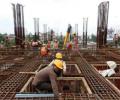
Around 81 per cent of the workers constitute the unorganised sector - devoid of any social security cover and outside the purview of a complex set of labour laws.

The government is drawing up a relief package for industry with steps such as relaxation of asset-classification norms by banks, thus allowing companies to delay the repayment of loans, and tax holidays for the worst-hit sectors like aviation and hospitality. But it might not be enough to stop more bankruptcies from getting filed.

Companies will have to follow all requirements laid out under rules for holding board meetings via video conferencing such as recording of these proceedings, ensuring availability of proper equipment among others.

The government is also planning to set up specialised Benches for competition law to reduce the burden of the appellate tribunal, which is referred to on all matters from company law and IBC to competition law and the national financial reporting authority.

The Seventh Pay Commission had decided to choose the CPI-IW as the index for adjusting inflation for central government employees.

With auditing under the scanner and two of the Big Four firms stopping non-audit services for audit clients, auditors will now be subjected to a more stringent standard of reporting.

The new web form would facilitate on-screen filing and real time data validation for seamless incorporation.

Deloitte India would not provide non-audit services to all listed companies and other entities where public money is involved such as banks and insurance companies, if they are its audit clients.
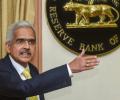
Taking advantage of the RBI's different accounting year, the Centre had started demanding an interim dividend till the time the latter's final balance sheet is prepared (usually in August). To address this anomaly, an expert committee led by former RBI governor Bimal Jalan had recommended aligning the RBI's financial year with that of the government.

Facebook-owned messaging service WhatsApp has secured regulatory approval for launching its digital payment platform -- WhatApp Pay -- in a phased manner, close to two years after the US-based company's pilot run.

The government has found about 900,000 beneficiaries of its flagship job formalisation scheme, the PMRPY, were ineligible in the first place as they were part of the formal economy even before the inception of the scheme. The EPFO has also recovered Rs 222 crore so far from the employers concerned.

'The banks cannot pass on the hike in premiums to its customers, according to the norms. The premium won't go up substantially in any case and may be hiked to 12-13 paise (per deposit of Rs 100 a year),' Finance Secretary Rajiv Kumar said.

Finance Minister Nirmala Sitharaman has brought down the budgetary allocation for the fertiliser subsidy for FY21 to Rs 71,309 crore, from the RE of Rs 79,998 crore for FY20, while increasing food subsidy to FCI through "ways and means advance" to Rs 50,000 crore for FY21, from Rs 36,000 crore in RE for FY20, and under the National Food Security Act (NFSA) to Rs 77,982 crore, from Rs 75,000 crore.

This demand comes at a time when the government is falling short of its revenue targets due to dwindling tax and low disinvestment receipts. It could account for the dividend in the upcoming Union Budget on February 1. RBI is, however, yet to take a final call on the government's demand and might decide on this at its central board meeting scheduled for February 15 in New Delhi.
 © 2025 Rediff.com - Investor Information - Advertise with us - Disclaimer - Privacy Policy - Sitemap - Feedback - About us - Terms of use - Grievances